This is Part 1 of a four-part series, a broad conversation about reading and what it does to us over time. No category, no prerequisites. All are welcome at this table. The Table of Contents for this series can be found here.
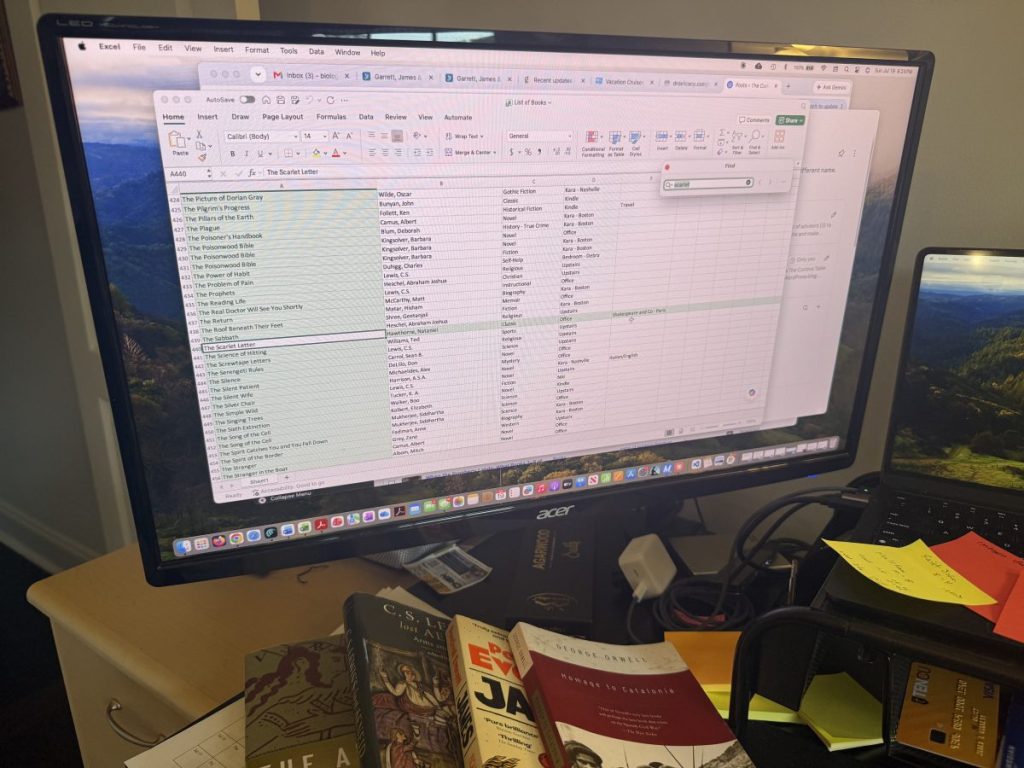
It was an ordinary Monday morning. Coffee on the right, keyboard under my fingers, the house still quiet. I had logged into my Goodreads account for a small housekeeping task, I honestly don’t remember what it was, when I noticed a link I had never clicked: Export your library.
Curiosity got the best of me. It usually does.
A few seconds later a spreadsheet opened on my screen. Three hundred ninety-eight rows. Titles, authors, dates, the little star ratings I had tapped over the years without much ceremony. I expected a list. What I found, as I scrolled, was something closer to a mirror.
Because here is the thing about a reading record kept over twenty years… it doesn’t just remember the books. It remembers you. The dates told a story I had lived but never quite seen laid out in one place, and it fell into three distinct seasons.
The first season belonged to my working years. I spent thirty-six years in the IT industry, applications, infrastructure, management, and the books scattered across those rows read exactly like the man who chose them. Books about how things work. The brain. The gene. The microbes we carry around inside us. Surgeons writing honestly about an imperfect science. I read the way I worked: taking systems apart to see what made them run. Good books, every one of them. But looking at those rows now, I can see a reader who was gathering information… and not yet expecting to be changed by any of it.
The second season surprised me when I saw it in the data, though it shouldn’t have. When I stepped away from IT in 2016, I didn’t step into a hammock. I stepped into a classroom, building an AP Biology program at a private school, teaching science research and general biology courses. And the spreadsheet shows it: those years, my reading bent itself toward my students. The science titles kept coming, but they were no longer for me. I was reading to bring a subject alive for teenagers, hunting for the story inside the mitochondria, the human face behind the discovery. There is a kind of reading we do in service of the people in front of us, and it is good reading, but it is borrowed reading. And then the record goes nearly silent for two years. Three classroom preps and a global pandemic will do that. The books didn’t stop mattering. The margin simply disappeared.
The third season is the one I’m living now, and the numbers made me laugh out loud at my keyboard. The year I fully retired, the dam broke: 33 books. Then 35. Then 47, then 50, then 66 last year. But it wasn’t the quantity that stopped me… it was the kind. The systems books faded. In their place came Melville and Dostoevsky, Hawthorne and O’Connor, painters’ biographies, theology, poetry… and, of all things, Homer. Somewhere in those rows, without ever announcing it to myself, I had stopped reading to understand how things work and started reading to understand what things mean, and what they might be quietly doing to me.
Three seasons. Same man at the keyboard. And I suspect that if you kept a record, or even if you didn’t, you would find seasons of your own. The years when work squeezed reading down to airport paperbacks. The years when everything you read was for someone else: your students, your kids at bedtime, your job. Maybe you’re in one of those seasons right now, wondering if the richer one ever comes. I want to gently suggest that it does… and that it may already be closer than you think.
I’ll tell you one more thing the spreadsheet showed me, though it showed me by omission. The book I have spent more hours with than any other in my life, more than all 398 rows combined, I’d wager, appears nowhere in that export. Not one row. It isn’t on a shelf I finish and rate; it’s closer to the water I swim in. I’ll leave that mystery sitting right here on the table for now… we’ll come back to it before this series is done.
Over the next three posts, I want to walk through what that mirror showed me. Next time, I’ll confess something about the very first book I picked up in retirement, a classic I was supposed to have read in high school and, well… let’s just say I was that student. Reading it forty-some years late didn’t just fill a gap in my education. It changed the reason I read everything that came after it.
But here is where I’d like to leave you today, over whatever is in your own cup this morning: your shelf is keeping a record of you, too. The nightstand stack, the Kindle library, the row of spines you haven’t touched since the move, whether you log it or not, it has been quietly writing your biography in someone else’s titles.
Go look. See if you can find your seasons.
Then come back and join me here… I’d love the company.

