
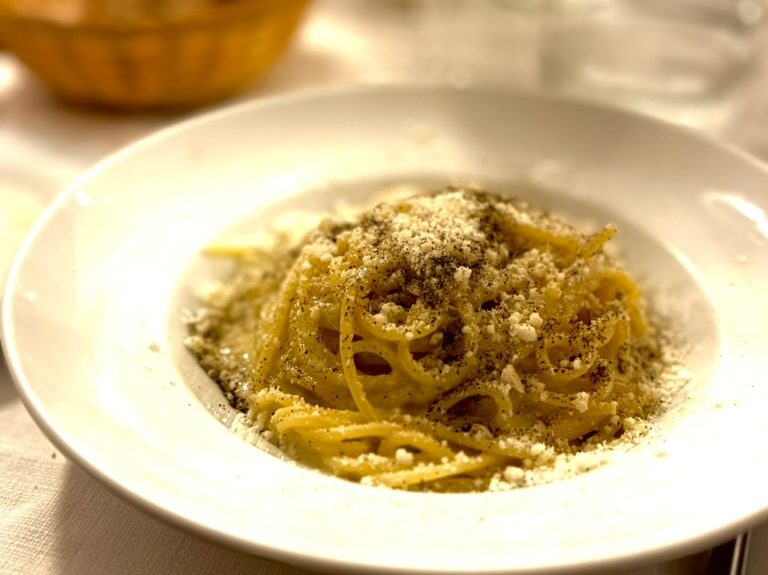
Some books practically invite you into the kitchen while you read them, and Camilla Trinchieri’s Murder in Chianti is one of those novels. The first in her Tuscan mystery series, it’s steeped in food, wine, and the rhythms of village life, all wrapped around a murder investigation that keeps you turning pages. Pairing it with an afternoon spent making your own carbonara and sipping a glass of Chianti Riserva feels almost too fitting, as if the book itself has set your table.
Carbonara is a dish that rewards attention and care. You can’t rush the pasta or ignore the heat; you must watch the sauce, coaxing eggs and cheese into just the right creamy texture without tipping into scrambled territory. There’s a choreography to it: boiling the pasta, crisping the pancetta or guanciale, reserving the starchy water, then combining everything at the perfect moment. In Murder in Chianti, there’s a similar choreography in the way the investigation unfolds. Clues simmer under the surface, relationships crisp and crackle, and the detective patiently manages the “heat” of suspicion and gossip in a small Tuscan town. Both the dish and the story ask for a kind of attentive presence.
As you stir the pasta, listening to the gentle sizzle in the pan, it’s easy to imagine Trinchieri’s characters moving through their own kitchens, pouring olive oil, chopping garlic, and talking about life, love, and the strange things people do when they think no one is watching. The food references in the novel aren’t just decorative, they anchor the story in a tangible, sensory world. You can smell the herbs, see the plates set out, hear the clink of cutlery. Preparing your own carbonara while reading becomes a way of entering that world, not just observing it from the outside.
Then comes the moment you plate the carbonara and pour a glass of Chianti Riserva. The wine, with its deep color and layered flavor of fruit, earth, and a hint of spice, adds another dimension to the experience. It’s not merely a drink; it’s a companion to the meal and, somehow, to the mystery on the page. The complexity in the glass mirrors the complexity of the case: motives that aren’t straightforward, histories that have been quietly aging, secrets that add their own “notes” to the story. Just as you might swirl the wine and try to identify what you’re tasting, you swirl around the clues in your mind, wondering how they’ll eventually come together.
Spending an afternoon with this pairing becomes more than simple entertainment; it turns into a small ritual of attention. You read a chapter, then check the pasta. You let a conversation in the novel settle in your thoughts while you crumble cheese or taste the sauce. The act of cooking slows you down, keeps you from racing through the book. And Murder in Chianti benefits from that slower pace. The more time you spend in its Tuscan setting, the more you notice subtle details, the way neighbors talk, the rhythm of daily life, the gentle tension between tradition and change.
When you finally sit down to eat, fork twirling carbonara and the glass of Chianti within reach, the novel’s atmosphere feels closer, more intimate. The simple act of tasting your food connects to how the characters savor their meals, share conversations, and navigate their relationships. Food in the story often serves as a bridge between cultures, between generations, between people trying to understand one another. Your own meal becomes a little bridge, too, between you and the world Trinchieri has created.
And there’s something fitting about solving fictional crimes in such a setting. Mystery novels are, in their own way, about transformation: disorder into order, confusion into clarity. Cooking carbonara carries a softer echo of that process. The raw ingredients becoming something cohesive and satisfying, chaos in the kitchen calming into a finished dish. The Chianti Riserva, patiently aged, reminds you that some things take time to reveal their best selves, just like a good mystery and just like certain truths about people.
So, if you’re looking for a way to deepen your reading experience, Murder in Chianti paired with an afternoon of cooking and a glass of Chianti Riserva offers a rich, layered invitation. Let the book guide you into Tuscany while the aromas from your own stove fill the room. Taste the creamy carbonara and robust wine as you follow the threads of the investigation. Allow the pleasures of food, story, and place to blend into something you’ll remember long after both the plate and the glass are empty.
 The Curious Table