
A brisk one mile walk through the streets of Manhattan, along packed sidewalks, and construction barriers. Tickets tucked neatly into the iPhone that is simultaneously directing our steps. Turning the corner onto Lincoln Center Plaza, I suddenly slowed to an almost reverent pace. I was caught by the blaze of glass and stone, the five soaring arches of the Met’s façade holding the golden glow of its lobby like a lantern against the Manhattan dusk. Beyond the glass, Chagall’s vast murals hovered over the crowd and the crystal chandeliers floated at what seemed like half-mast, and in that instant the city’s noise receded, replaced by the unmistakable sense that I had stepped onto the threshold of a temple.
Standing in that lobby unsure if I was prepared for my very first opera, and at the Metropolitan Opera in New York City no less. I attended La Traviata, which I’ve been told is not only one of the most popular operas, but also one of the best introductions for someone new to the experience. That was reassuring, because I’ll admit—walking into something like this for the first time felt a little like stepping into unfamiliar territory. Still, that’s part of the appeal. I was very curious to see how it all came together—music, staging, voices—and whether it would become a new friend in the world of live performances.
Walking in I knew very little. La Traviata tells the story of Violetta, a woman living a glamorous but complicated life in Paris, who unexpectedly finds real love with a man named Alfredo. But, as you might expect with opera, it’s not that simple. There are social pressures, personal sacrifices, and some tough choices that seem to shape how their relationship unfolds. It sounded like a mix of romance and heartbreak, with a lot of emotional weight behind it—which, honestly, seemed like the perfect kind of story to experience in a setting as grand as the Met.
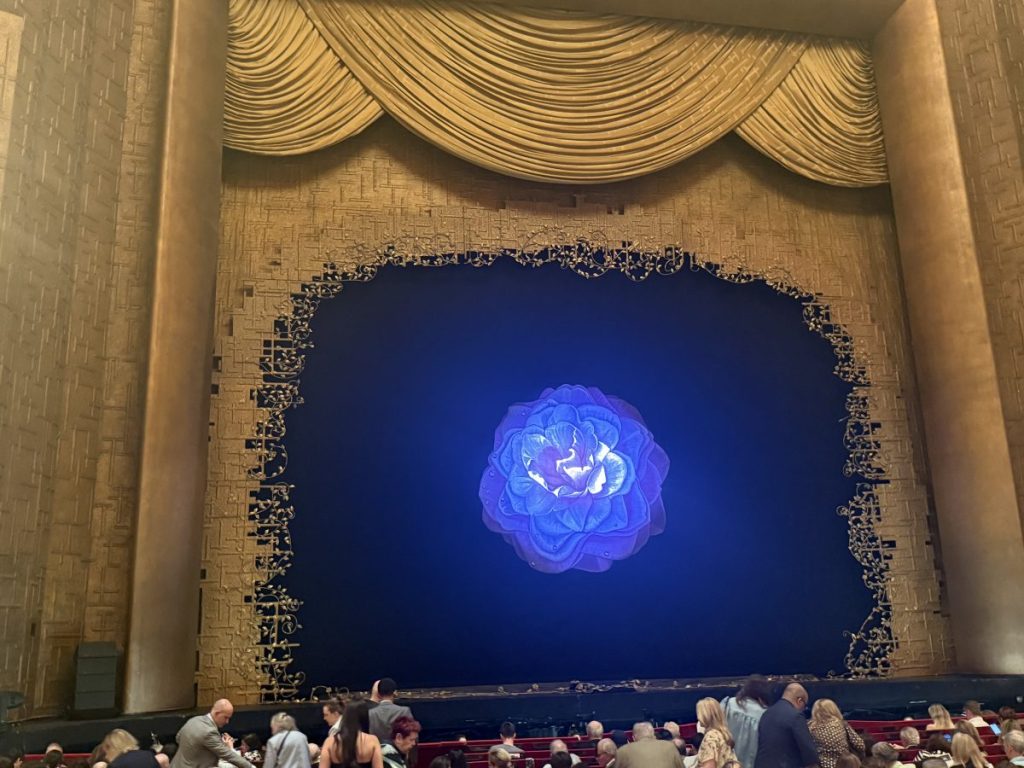
The experience really began before the curtain even went up. The entrance to the opera house was like walking back into the Gilded Age as if I should have been in a tuxedo but was warmly pleased to see most folks dressed just as I was. Red carpet, gold trim, and chandeliers greet you with an elegance of craftmanship. And then … the curtain rises.
Immediately I was immersed into a snow globe visually right in front of me at the distance between seat and stage.
Looking back on that night at the Metropolitan Opera, I find myself thinking about more than just the performance itself. There’s something about being in that space, surrounded by so much history and talent, that added weight to the experience. For a first opera, La Traviata felt like an ideal introduction—emotional, accessible, and visually striking in ways I hadn’t fully expected. It gave me a better sense of why opera has endured for so long and why so many people are drawn to it.
What surprised me most was how little I even noticed the absence of English in the voices projected from the stage. Yes, on the back of the seat in front of me was a small rectangular device that was flashing up the translated English, but amazingly as the performance unfolded, I found myself glancing at it more than staring at it. It wasn’t hard to start getting the “gist” of the story and I was learning to recognize a lot of “communication” through the posture and expressions of the performers. A face experiencing a broken heart is more universal than we may acknowledge at times.
What began to develop parallel with following the story line was hearing the voices as… an additional instrument “in the” orchestra. I couldn’t help but wonder if this was made more possible due to the fact that since I don’t speak Italian it freed my mind to concentrate much more on the “sound” and blending of the voices into the orchestral performance that it slowly became a fully immersive symphony with all the color, movement, human emotion layered together.
I went in curious, maybe even a little unsure of what to expect, and came away with an excitement of growth in my understanding of where opera my very well fit into my cultural experiences. Like my recent experiences with ballet, this felt less like a one-time outing and more like the start of something I’d like to explore further. If nothing else, it reminded me that it’s never too late to discover something new—and enjoy the process along the way.

